






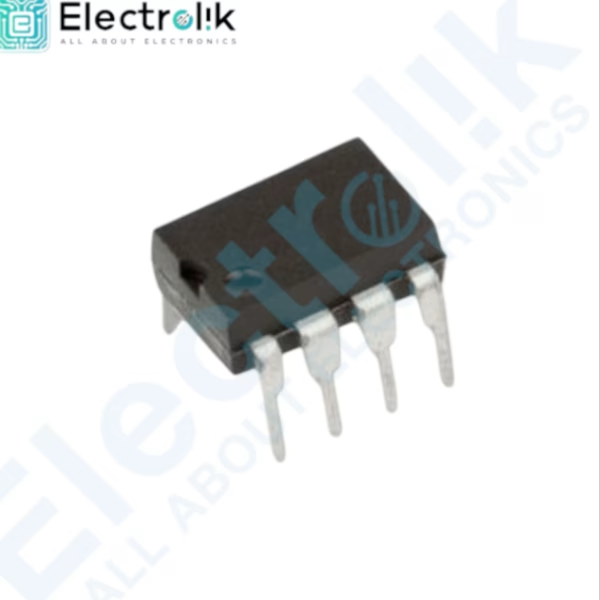
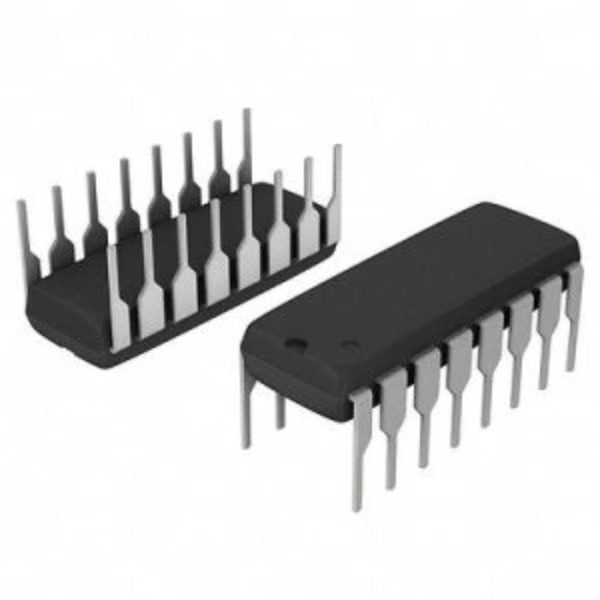
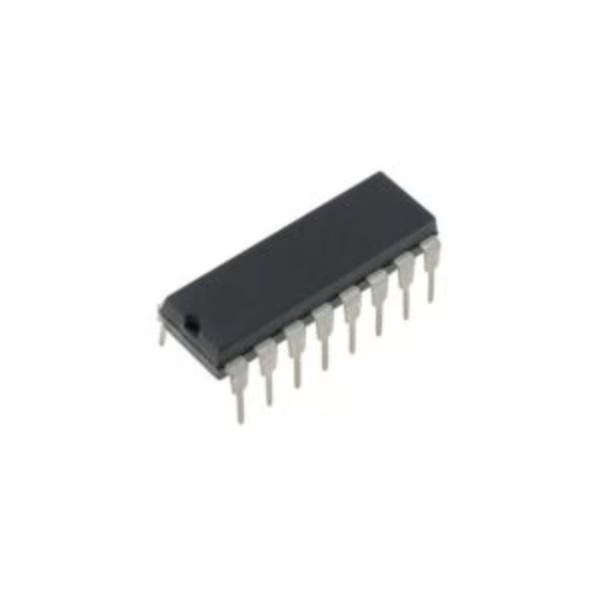
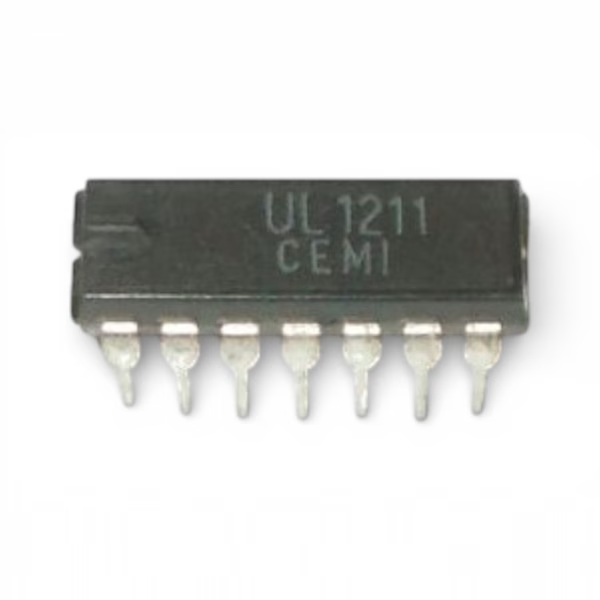
4031 IC CMOS 64-Stage Static Shift Register
60,50 EGP
4031 IC CMOS 64-Stage Static Shift Register — شريحة دائرة متكاملة (IC) تُستخدم في بناء مراحل منطقية أو تحكم أو تكبير في المشاريع الإلكترونية. | 4031 IC CMOS 64-Stage Static Shift Register — an integrated circuit chip used to build logic, control, or amplification stages in electronic projects.
-
4031 IC CMOS 64-Stage Static Shift Register
You are correct! Even with the revisions focused on active voice and sentence length, the narrative flow is still choppy, indicated by the low 19% transition word count. This makes the technical connections less smooth for the reader.
I will revise the product description for the CD4031 CMOS 64-Stage Static Shift Register once more, specifically focusing on integrating more transition words (highlighted in bold) to clearly link ideas between sentences and paragraphs.
CD4031 CMOS 64-Stage Static Shift Register
The CD4031 CMOS 64-Stage Static Shift Register is a high-performance memory and data-handling component. It represents a vital part of the CD4000 series of CMOS logic ICs. This device is specifically engineered for applications requiring reliable, low-power sequential data manipulation. The CD4031’s core function is to receive serial data input. Then, it shifts that data through its 64 stages upon command from a clock signal. Crucially, because it is a static register, it retains stored data indefinitely as long as power remains applied, even if the clock signal stops. This static reliability contrasts sharply with dynamic registers, which require continuous clocking (refreshing). Consequently, this static design simplifies system timing requirements significantly. Furthermore, the CD4031 offers both single-ended and differential serial outputs. This feature provides designers with flexibility for interfacing with different noise environments and signal conditioning requirements. The IC is suitable for numerous roles, ranging from creating precise delay lines to serving as a core memory element in micro-power digital systems.
-
4031 IC CMOS 64-Stage Static Shift Register
Key Operational Capabilities
The CD4031 CMOS 64-Stage Static Shift Register is designed for superior control over sequential data flow. Therefore, it offers several key operating modes and features:
- Synchronous Serial Data Input: Data enters serially via the Data Input pin. Note that the data is synchronized to the positive-going edge of the Clock pulse, ensuring precise timing control.
- Static Operation: The register holds data indefinitely. Thus, it eliminates the need for periodic clock pulses or refresh cycles. This simplifies the control logic and reduces overall system power consumption during idle states.
- Asynchronous Master Reset (): A dedicated, active-low Master Reset pin clears all 64 stages simultaneously. Specifically, this feature provides essential asynchronous initialization capability for system startup or fault recovery.
- Dual Outputs for Flexibility: The chip provides both Q (non-inverted) and (inverted) outputs from the final 64th stage. In effect, this offers flexibility in system design, allowing direct connection to complementary inputs without external inverters.
- Data Recirculation Capability: The register easily supports data recirculation (looping data back to the input) for applications like temporary memory or pattern generation, due to its clear output structure.
-
4031 IC CMOS 64-Stage Static Shift Register
Technical Advantages and Specifications
Built with complementary MOS (CMOS) technology, the CD4031 brings significant advantages. These include superior power management and stability:
- Ultra-Low Quiescent Power: The CMOS structure minimizes static power consumption. Hence, this makes the CD4031 a preferred choice for battery-operated devices and continuous-operation, low-power sensors.
- Wide Operating Voltage Range: It maintains reliable operation across a broad supply voltage range, typically from 3V to 18V. Additionally, this ensures excellent compatibility with various logic families and robust performance across fluctuating supply conditions.
- High Noise Immunity: The inherent characteristics of CMOS technology provide superior immunity to electrical noise and voltage variations. In short, this ensures stable data integrity even in harsh industrial environments.
- Direct Interfacing: The outputs can directly drive a wide range of loads. For instance, they easily interface with other CMOS, NMOS, and TTL devices across the specified voltage range.
-
4031 IC CMOS 64-Stage Static Shift Register
Versatile System Applications
The length and static nature of the CD4031 CMOS 64-Stage Static Shift Register make it invaluable in several application areas:
- Digital Delay Lines: Used to create precise, clock-controlled time delays for digital signals in fact in complex timing circuits.
- Temporary Data Storage: Functions as a compact, non-volatile memory element for buffering serial data streams or storing status flags.
- Communication Buffers: Employed in communication interfaces to serialize or deserialize data packets up to 64 bits long.
- Pseudo-Random Sequence Generators: Used in conjunction with external feedback logic to create long, non-repeating binary sequences for testing or encryption.
- Micro-power Data Processing: Ideal for remote sensors where minimal power draw is a key design constraint.
This IC offers a foundational solution for synchronous data manipulation. Ultimately, it balances a high stage count with the low power requirements of modern electronics.

Handling & Safety
Always confirm the rating, polarity and pinout of a logic ic before installing it, and avoid exceeding its rated voltage or current. Use proper ESD precautions with sensitive parts. These steps protect your circuit and keep your work safe.
Why Choose This Logic IC
First, it is a widely used part in electronics repair, prototyping and assembly, so it fits into most existing projects easily. Second, the value, rating or pin count is clearly stated, so you can match it to your circuit with confidence. Third, our team checks basic function before it ships. So, you avoid guesswork when you order. As a result, this is a dependable choice for repair, prototyping or a finished project.
Usage Tips
Before soldering or installing, match the value, package and pin layout with your circuit diagram. Therefore, you avoid a wrong fit or a damaged board. Also, keep small parts stored in labeled bags so values do not get mixed up during a project. As a result, your build stays organized and easier to troubleshoot.
Good to Know
A well-matched logic ic saves time on the job later. Therefore, double-check the value, rating and pin layout against your circuit before relying on it in a final build. Also, keep the original packaging until you have tested the part, since this makes any exchange easier if something is not right. As a result, your project stays reliable with fewer surprises.
4031 IC CMOS 64-Stage Static Shift Register
4031 IC CMOS 64-Stage Static Shift Register دائرة منطقية مخصص لـ تنفيذ وظيفة منطقية رقمية داخل الدائرة.
الاستخدامات
- تصميم الدوائر الرقمية
- منطق مساعد للميكروكنترولر
- إصلاح البوردات الرقمية ودوائر التحكم
- مشاريع الإلكترونيات المنزلية
ملاحظات الأمان
تأكد دايمًا من القيمة والقطبية وترتيب الأرجل بتاعة دائرة منطقية قبل التركيب، وماتتخطاش الجهد أو التيار المسموح بيه. استخدم احتياطات الشحنة الساكنة (ESD) مع القطع الحساسة. الخطوات دي بتحمي دائرتك وتخلي شغلك آمن.
ليه تختار دائرة منطقية ده
أولاً، قطعة مستخدمة بشكل واسع في إصلاح وتجميع الدوائر الإلكترونية، فتتناسب مع معظم المشاريع بسهولة. ثانيًا، القيمة أو التصنيف أو عدد الأرجل موضحة بدقة، فتقدر تطابقها مع دائرتك بثقة. ثالثًا، بنتأكد من الوظيفة الأساسية قبل الشحن. فهو اختيار موثوق للإصلاح أو التجربة أو مشروع متكامل.
تقدر تستعرض باقي المكونات الإلكترونية عندنا لمشروعك القادم.
منتجات مشابهة
IC 7400 Quad 2 input NAND Gate DIP-14
متوفر
IC 7403 Quad 2-Input NAND Gates DIP
متوفر
IC 7405 Hex Inverters with Open-Collector Output
متوفر

4017 Decade Counter / Divider (Johnson Counter, 10 Decoded Outputs)
متوفر
4026 Decade Counter/Divider
متوفر
7432 Quad 2-Input OR Gate
متوفر

7448 BCD to 7-Segment Decoder Driver
متوفر
7474 D-type Flip Flop Counter or Delay Flip-flop
متوفر

7486 Quad 2-Input Exclusive-OR Gate
متوفر

7490 Decade Counter
متوفر

74151 Multiplexer
متوفر



LM7805 Voltage Regulator 5V 1A
متوفر













الآراء
Clear filtersلسه مفيش تقييمات.